Consumer rolls
Toilet rolls and kitchen towels with cored or coreless configurations, embossing and downstream retail packing.

Roll converting systems
Toilet roll, kitchen towel, coreless and JRT production do not call for the same setup. Start with the finished roll, then match the unwind, embossing, rewinding, sealing, cutting and packing modules.
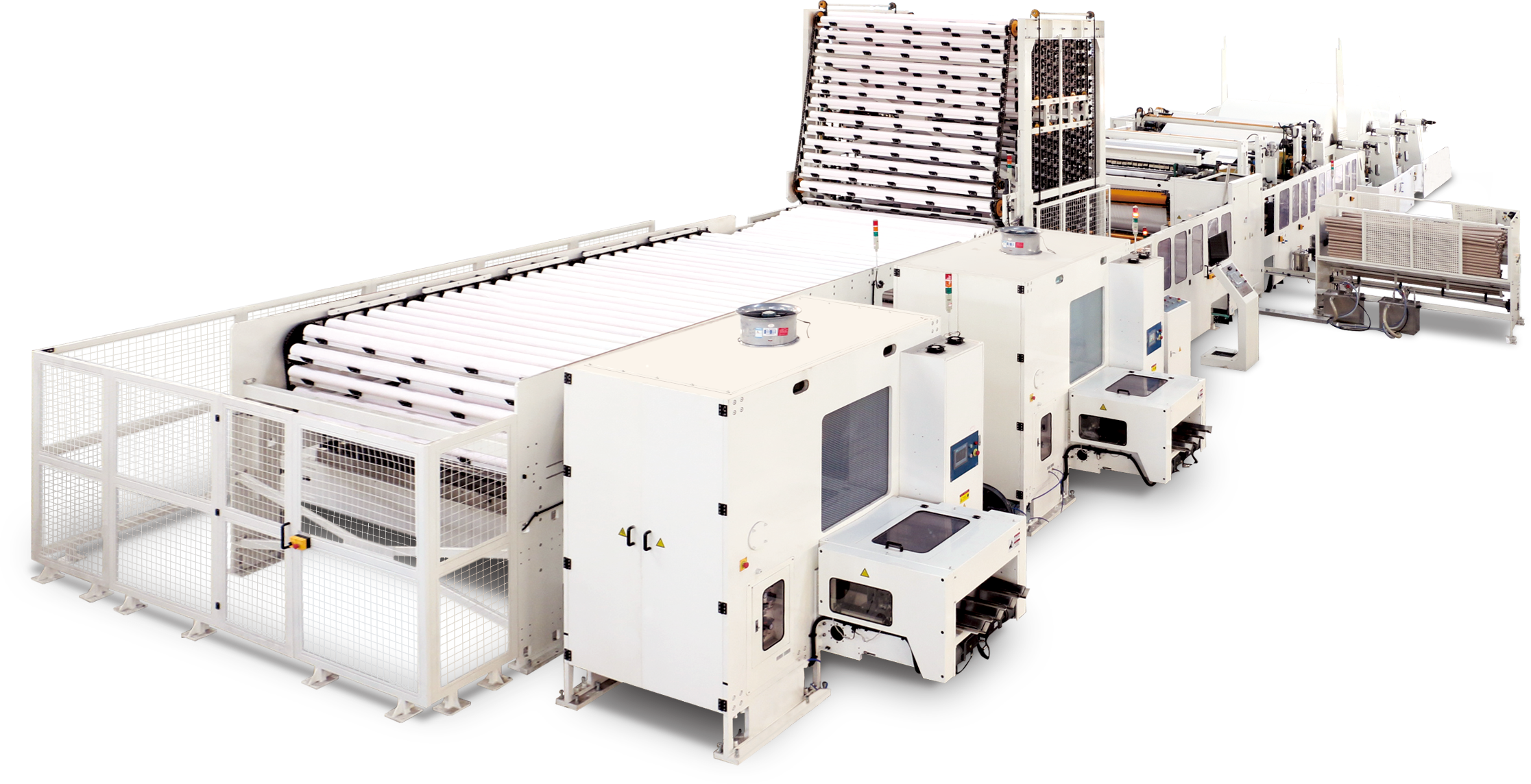
The line architecture follows the product and the plant. Modules can be specified as a production line instead of compared as isolated machines.

These figures belong to the named ZQ-H600 rewinder configuration. Final values depend on the selected line and options.
Reference model
A current catalogue platform for toilet roll, kitchen towel and JRT production lines.
The finished diameter, core, perforation, ply structure and pack format set the direction for each project.
Toilet rolls and kitchen towels with cored or coreless configurations, embossing and downstream retail packing.
JRT and industrial roll formats with larger finished diameters and project-specific cutting and packing.
Unwind, core making, rewinding, tail sealing, log handling, cutting and packaging can be laid out as one production flow.
Send the product format, parent roll, target output and available floor space. That is enough to start a useful engineering conversation.